Back to Home

The Collections

Four Scarves. Four Stories.

Each silk scarf is rooted in Ethiopian heritage and translated into a luxurious modern statement — preserving ceremony, civilization, womanhood, and memory through color, symbolism, and craft.

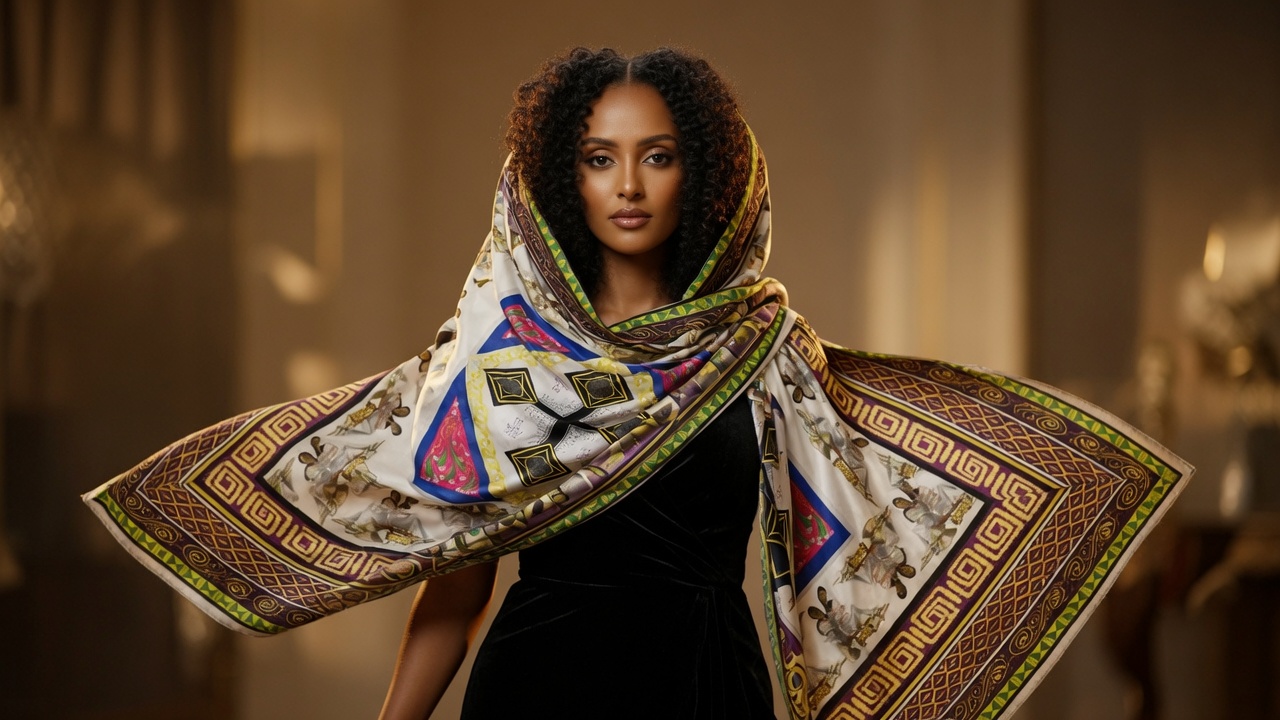
Model wearing the Buna scarf in white with colorful Ethiopian-inspired motifs

Scarf 01 · White & Colorful

The Buna Scarf

A portrait of ceremony, intimacy, and belonging.

Inspiration

Buna — meaning coffee in Amharic — is the heart of Ethiopian and Eritrean social life. The traditional coffee ceremony is far more than a beverage ritual: it is a slow, intentional gathering that marks friendship, hospitality, mourning, and celebration.

We wanted the Buna scarf to feel like stepping into a tukul filled with the smell of frankincense and freshly roasted beans, where women gather to talk, listen, and witness each other.
Close portrait of the Buna scarf draped across the shoulders

Meaning & Symbolism

At the center of the scarf, two women sit close together in hand-woven habesha kemis, framed by a coffee platter and a mesob. Their nearness is deliberate — a quiet portrait of sisterhood, shared memory, and the unspoken language between women.

The white ground symbolizes purity, peace, and the cotton netela worn during ceremony. The bursts of color around it represent the spices, flowers, and grasses scattered on the floor to welcome guests.

  • Two seated womensisterhood and witness
  • Mesob basketthe table of hospitality
  • Jebena and finjal cupsritual and rhythm
  • Scattered grasseswelcoming the guest

Design Notes

Silhouette
90 x 90 cm square, hand-rolled hem
Material
100% Mulberry silk twill, 16 momme
Technique
Digital print developed from original hand-illustrated artwork
Edition
Limited release of 150 numbered pieces

Palette Story

  • Netela WhiteCotton ceremonial cloth#F4EFE6
  • Buna RedRoasted coffee cherry#B23A48
  • Mesob OchreWoven straw basket#C98A2B
  • Habesha GreenFresh ceremonial grass#3F6B4A
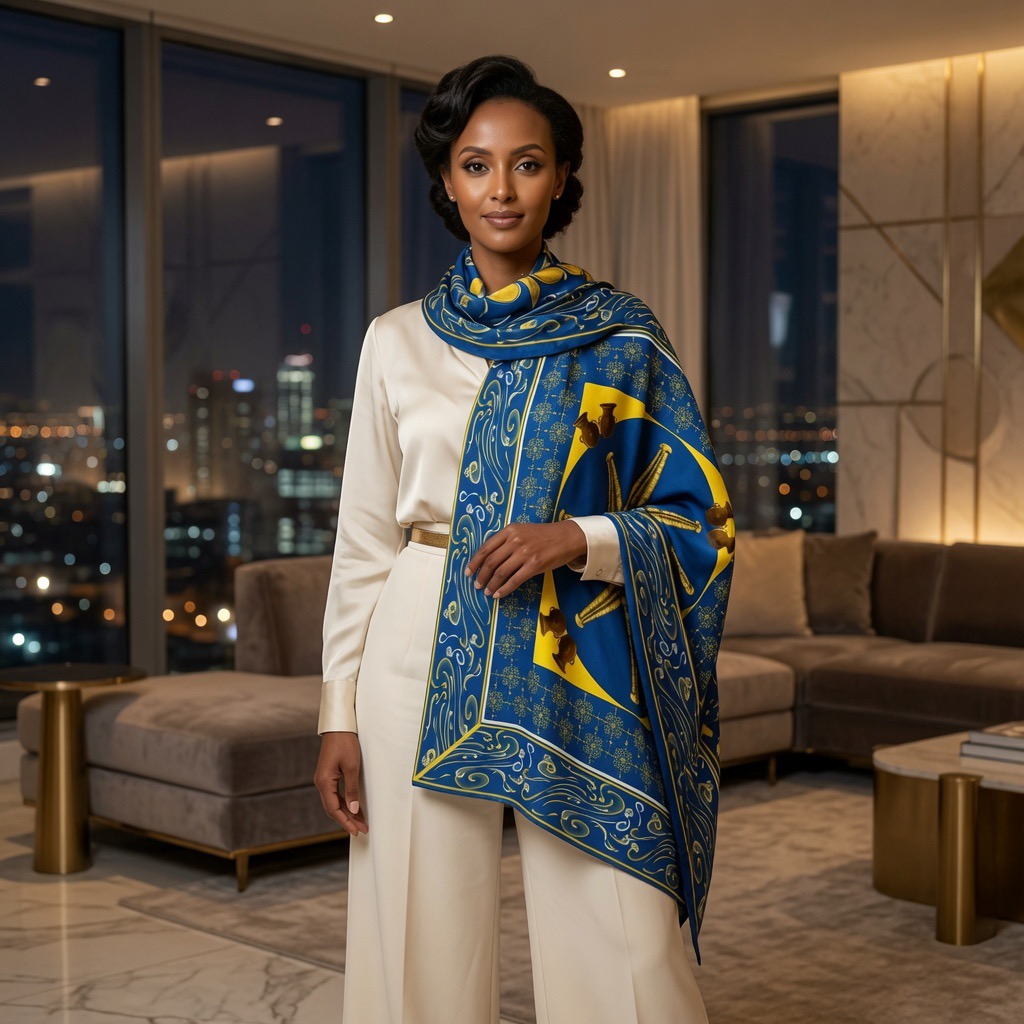
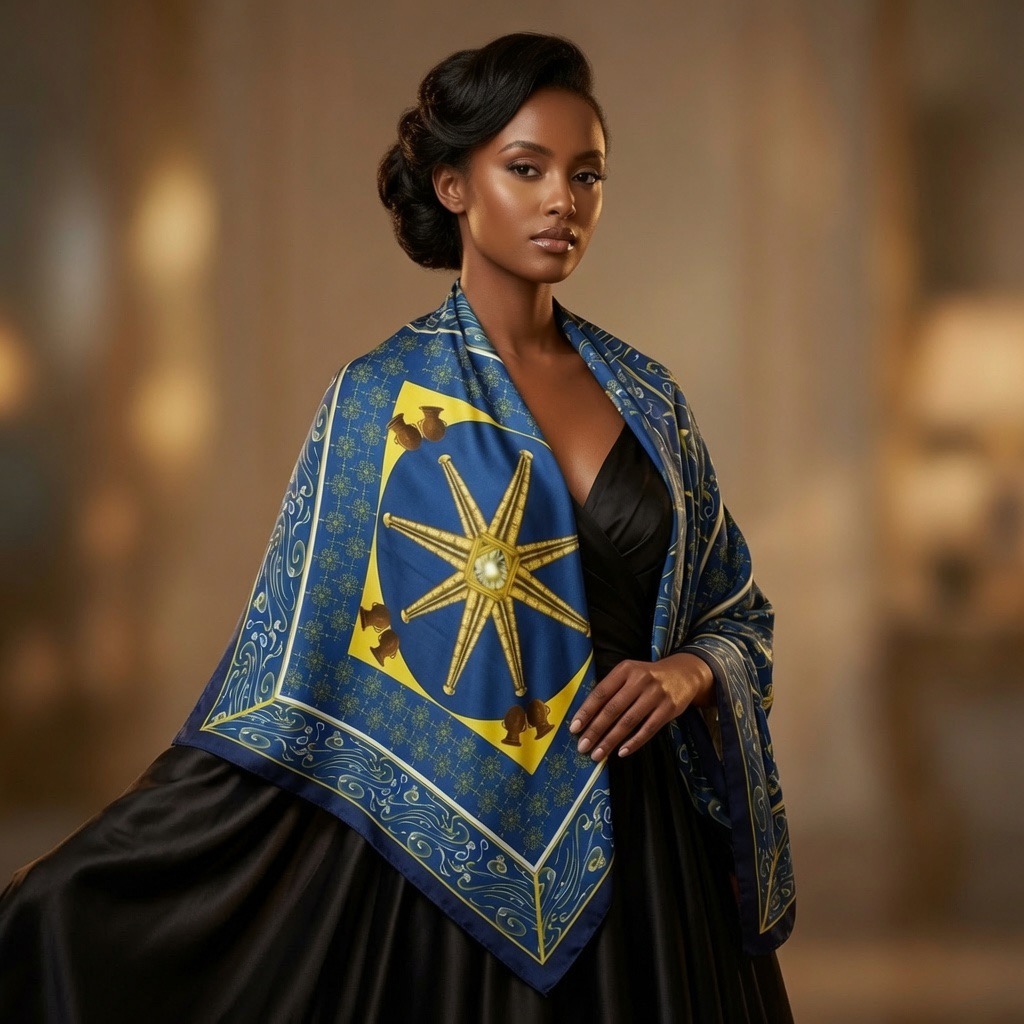
Model styled in black wearing the blue Axum Obelisk scarf

Scarf 02 · Blue

The Axum Obelisk and Civilization

An ode to one of the great empires of the ancient world.

Inspiration

The Kingdom of Axum was one of the four great powers of the ancient world, alongside Rome, Persia, and China. It was a civilization of traders, scholars, and engineers — the birthplace of the Ethiopic script and one of the earliest Christian kingdoms.

The 24-meter granite obelisk of Axum, carved as a nine-story Aksumite building with false doors and windows, anchors this scarf as a monument to Black architectural genius.

Studio photograph showing the full blue Axum Obelisk scarf in motion

Meaning & Symbolism

Blue leads the composition because water — rivers, rain, and the Red Sea trade routes — made the Axumite empire possible. It is the color of life, of movement, and of the unseen network that connected Africa to the world.

The looping meskel cross patterns honor the discovery of the True Cross celebrated each September, while the floral repeats reference the highlands in bloom. Yellow accents represent the sun that nourishes Ethiopia's harvests.

  • Nine-story steleAxumite architecture
  • False doorspassage between worlds
  • Meskel cross loopsfaith and continuity
  • Sun discsagriculture and abundance

Design Notes

Silhouette
110 x 110 cm oversized square
Material
100% Mulberry silk twill, 18 momme
Technique
Six-color print, screen-mapped from architectural studies of the stelae
Edition
Numbered run of 120

Palette Story

  • Tekeze BlueRiver of the highlands#1F4D7A
  • Indigo NightAncient sky#0E2A47
  • Meskel GoldSun and harvest#D4A23A
  • Granite GreyCarved obelisk#7B7E82
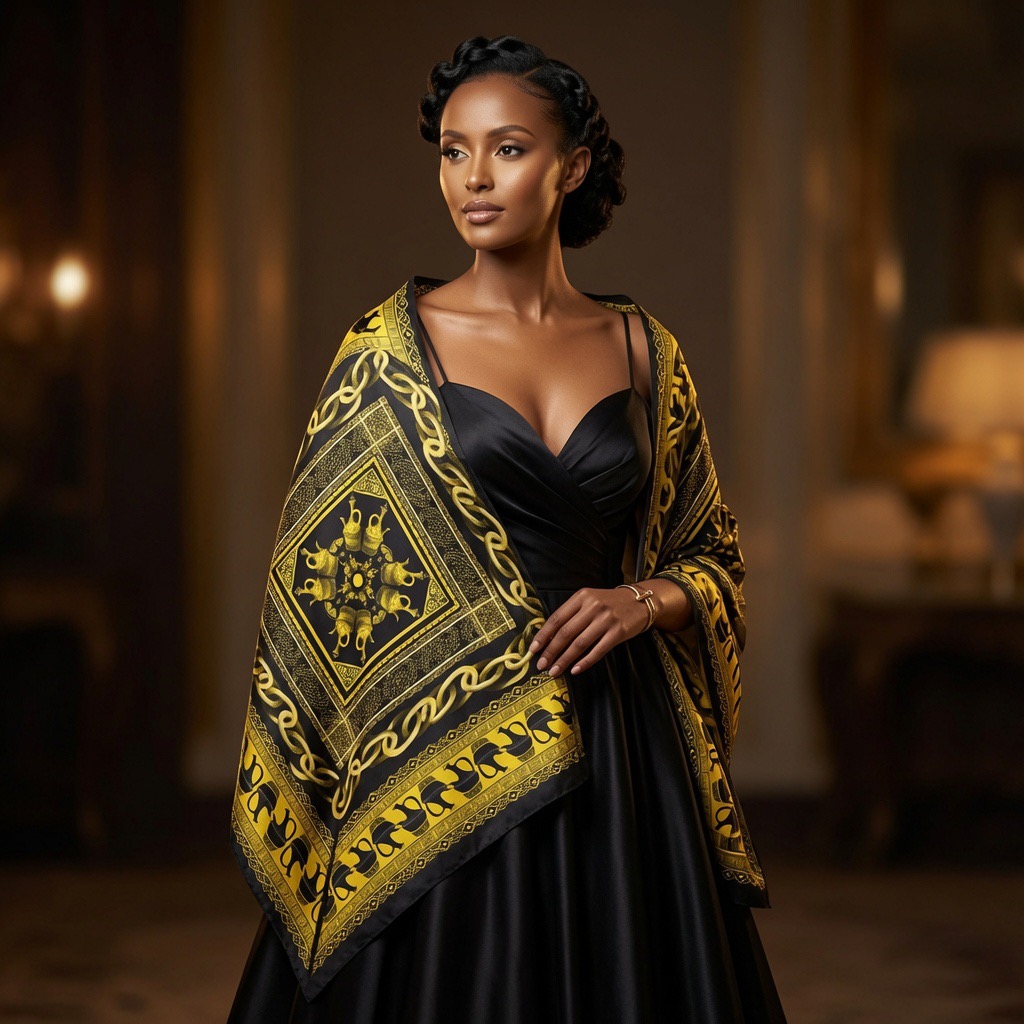
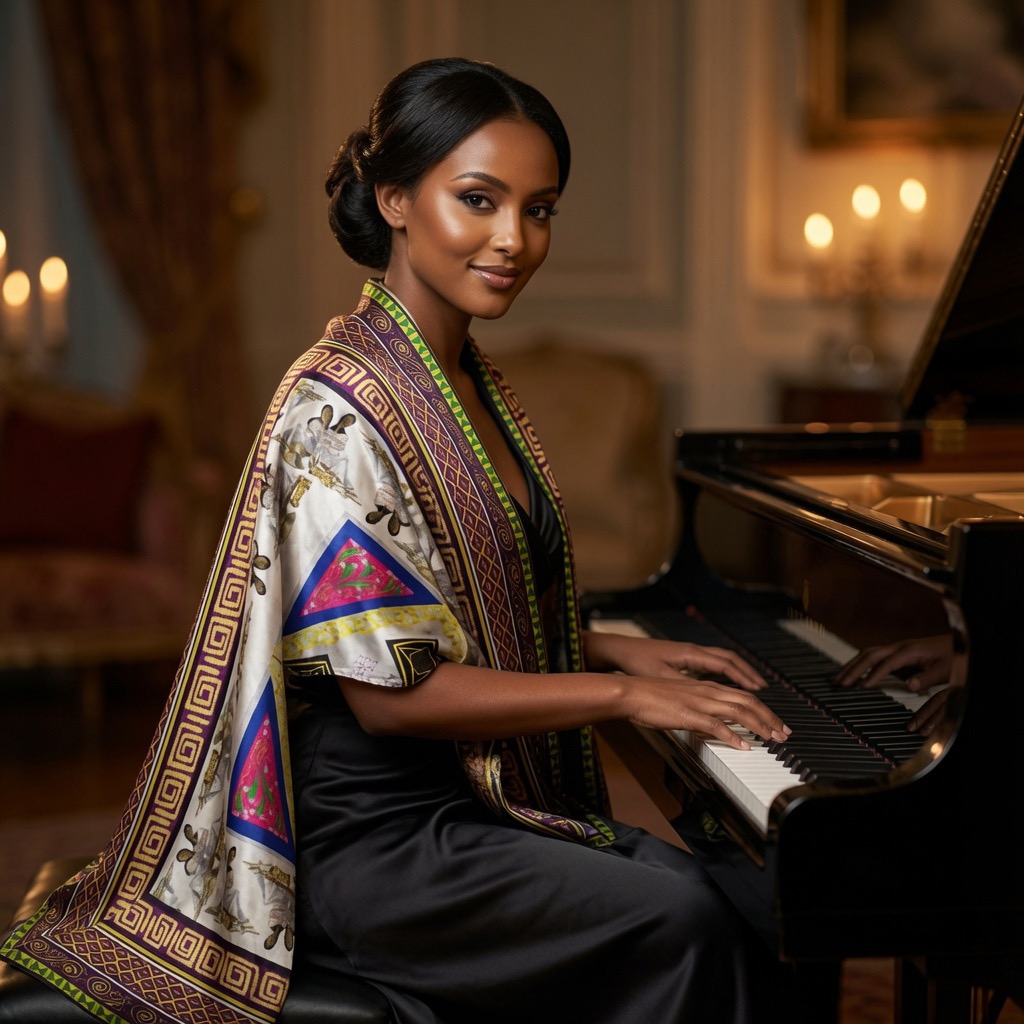
Model seated by a piano wearing the yellow Jebena scarf

Scarf 03 · Yellow

Jebena ጀበና

The clay vessel that holds a culture together.

Inspiration

The jebena — the round-bellied clay pot with a long neck and woven straw stopper — is the single most recognizable object in Ethiopian and Eritrean homes. Used in bunna maflat (ቡና ማፍላት), it is the vessel through which coffee, conversation, and community are poured.

We wanted to give the jebena the reverence it deserves, treating it as the regal centerpiece of an entire textile rather than a quiet domestic object.

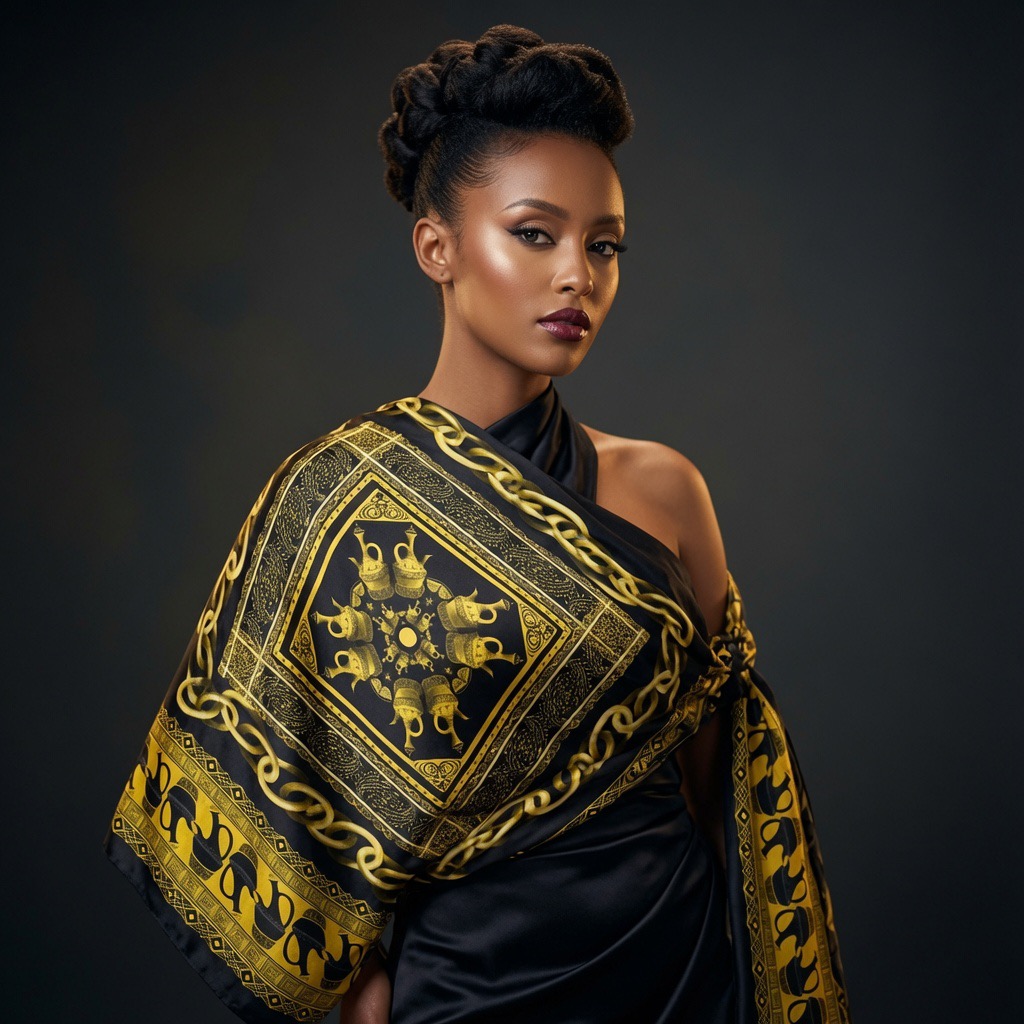
Studio portrait of the yellow Jebena scarf styled around the neck

Meaning & Symbolism

Women traditionally serve three rounds: Abol, the strongest and most prized; Tona, drawn from the reused grounds; and Bereka, the blessing — the cup 'for the road.' Each round signifies a deepening of trust between host and guest.

The chain looping around the composition and the jebena at the center symbolize dominion, lineage, and continuity. The surrounding florals reference teff, Ethiopia's ancient grain and the foundation of injera — the bread that holds every meal together.

  • Jebenathe vessel of ceremony
  • Triple cupsAbol, Tona, Bereka
  • Gold chain borderdominion and lineage
  • Teff floralsbread, land, sustenance

Design Notes

Silhouette
90 x 90 cm square, hand-rolled hem
Material
100% Mulberry silk satin, 16 momme
Technique
Hand-illustrated central motif, mirrored chain border
Edition
Limited release of 150 numbered pieces

Palette Story

  • Mitad YellowSun-warmed clay#E8B43A
  • Berbere AmberSpice and earth#B6731F
  • Injera CreamTeff harvest#F2E4C3
  • Onyx BlackRoasted bean#161412
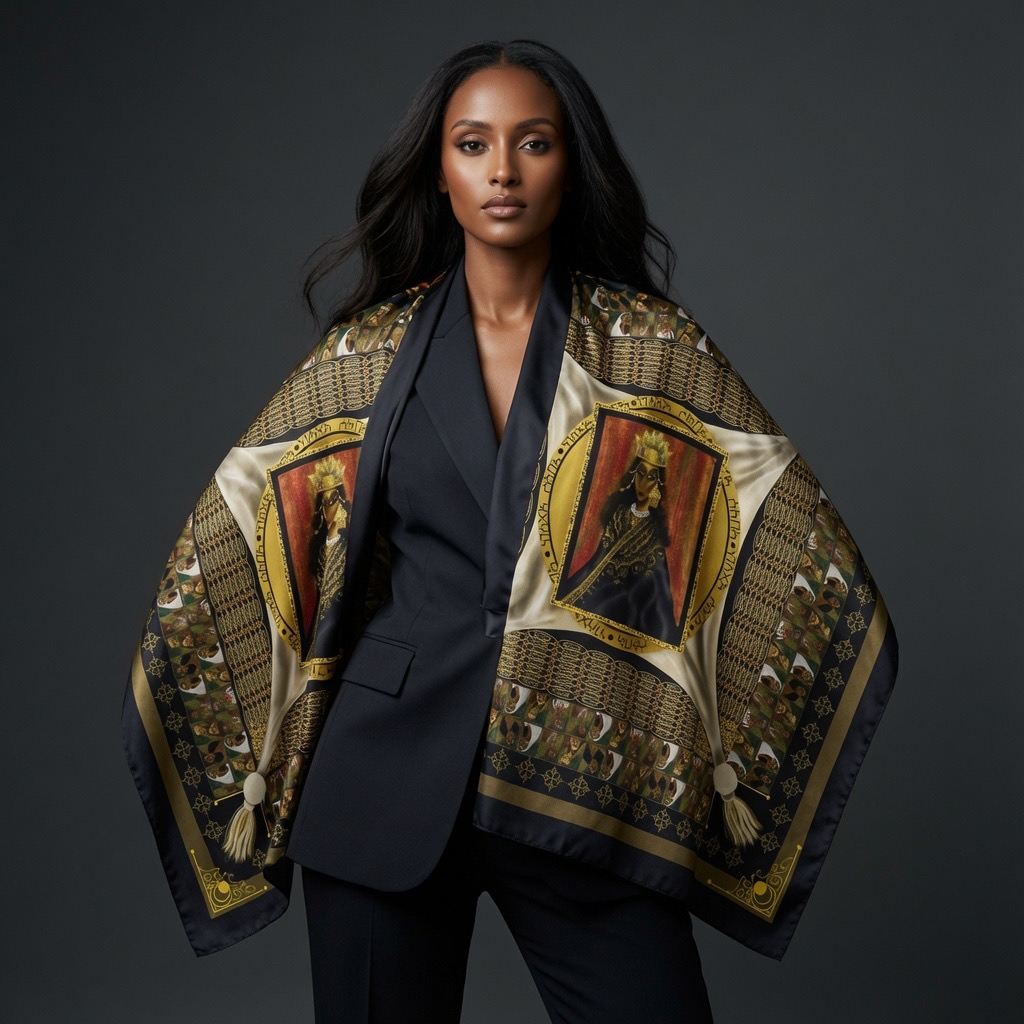
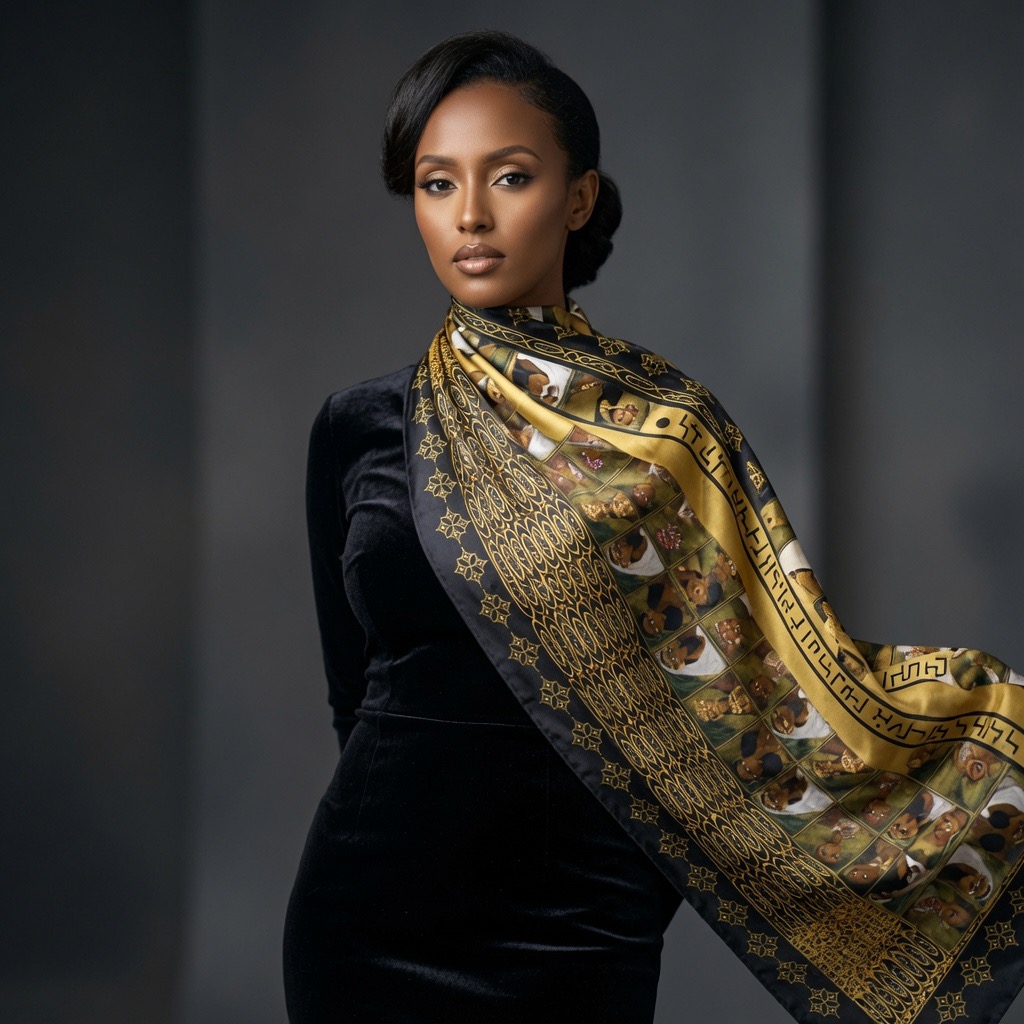
Portrait of model wearing the green Queen of Sheba scarf

Scarf 04 · Green

Queen of Sheba

A crown for the original queen — and for every daughter of her line.

Inspiration

Makeda, the Queen of Sheba, is one of the most iconic women in Ethiopian and biblical history — a sovereign of intellect, beauty, and diplomacy who traveled from Axum to Jerusalem to meet King Solomon. She is the matriarch of an entire imperial line.

This scarf is our love letter to her — and to every woman who has ever been told that her crown was metaphor.

Model holding the green Queen of Sheba scarf in motion

Meaning & Symbolism

She is draped in the traditional kaba and adorned with gold, diamonds, and the celebrated Ethiopian opal — a stone found only in the highlands of Welo, whose play of color we read as a portrait of African femininity itself.

Surrounding her are the faces of her daughters: a chorus that represents present-day Ethiopia and its 80+ ethnic groups, each with its own language, custom, and tradition. The green ground is the color of the highlands, of life renewing itself, and of the queen's enduring lineage.

  • Crowned Queensovereignty and intellect
  • Kaba and opalheritage and adornment
  • Daughters' facesthe 80+ ethnic groups
  • Gold borderlineage of Solomon and Makeda

Design Notes

Silhouette
110 x 110 cm oversized square
Material
100% Mulberry silk twill, 18 momme
Technique
Hand-painted portrait digitized at archival resolution, framed by 24k-gold-tone borders
Edition
Signature numbered edition of 100

Palette Story

  • Welo EmeraldHighland green#1F5D3A
  • Opal GlowEthiopian opal fire#C9D8B6
  • Crown GoldSolomonic lineage#C9A24B
  • Sheba OnyxNight of Axum#0E1A14